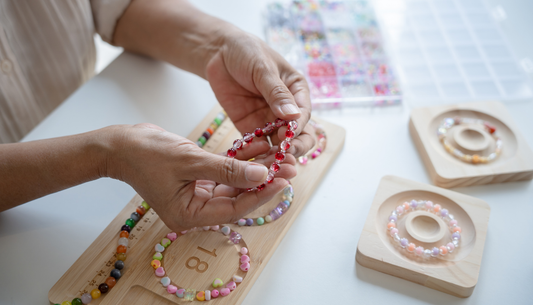

Acrylic and Glass Beads: Which Should You Use for Different DIY Projects?
Choose acrylic beads when you want light, colorful, budget-friendly pieces such as kids' bracelets and phone charms, and choose glass beads when you want deep color, real sparkle and weight, as in suncatchers and dressy bracelets. That one rule covers most DIY jewelry making. Acrylic shines for everyday wear, big batches and crafting with kids.
Glass is the pick when light matters. A strand in a window glows, and a glass bracelet feels solid on your wrist. You can also use both in one design, with glass as the highlight and plastic doing the bulk of the work.

Here at Popcornshop, we see the same thing every day: little beads bring big joy. There is real happiness in wearing something nobody else owns, because you made it. We want to help you pick the right beads so your next piece turns out the way you pictured it.
Most makers end up keeping both in their bead box, because the best pieces often use a little of each.
Acrylic Beads, Glass Beads,DIY Beads: Start With the Project
Picture the finished piece first, a chunky charm bracelet or a delicate sun-catching strand, because that picture decides size, shape and finish before material does. Acrylic is a type of plastic, so acrylic beads belong to the wider plastic bead family. Glass is its own family, but both come in many of the same looks.
Judge acrylic beads, glass beads and DIY beads for jewelry by their features first, and by material second. A good design idea fails with the wrong size or finish, whatever the bead is made of. So the smart move is to sort beads for jewelry making the way your eye will see them.

Compare size, shape, finish, color, and transparency
Five features shape how a piece looks. Use them as a quick check whenever you shop for DIY bead supplies:
- Size sets the scale, from about 2 mm to 25 mm for most craft beads.
- Shape sets the style: round, oval, square, bicone, rondelle, teardrop, heart, star, flower or letter.
- Finish sets the surface look: matte, glossy, frosted, glitter or iridescent.
- Color sets the mood and ties the piece to an outfit.
- Transparency sets how light moves through: transparent, translucent or solid.
Small beads read as detailed and fine, while large beads read as bold from across a room. Many jewelry design ideas start with that one choice. Pick the scale, then match shape and finish to it.
Check each product listing for material and hole details
A category name is not a material spec. Diy beads in a "crystal" or "pearl" group may be glass or plastic, so read the listing for the exact material. The hole size also lives there, and it varies by product even when two beads share the same outer size.
A common mistake is buying by outer size alone. A 10 mm bead can still have a hole too small for doubled cord or thick elastic. When fit matters, compare the hole size on the listing to the thickness of your stringing material, doubled if you plan to pass the cord through twice.
How Acrylic Beads and Glass Beads Differ in DIY Jewelry
Hold a strand of each and the difference is instant: acrylic barely registers in your hand, while glass has a cool, satisfying weight. That weight, plus how each one handles light, is the real split between them. Color and shape come in both.
Acrylic stays light and survives drops, while glass gives deeper color but can chip. Both make lovely beaded jewelry. The question is how the piece will be worn.

What lightweight acrylic beads offer for wearable designs
Acrylic beads are made for jewelry making by plastic injection molding. A machine melts resin pellets, presses and injects them into a mold, then ejector pins push the bead out. That is why letters, hearts and stars come out cheap and the same every time.
Lightweight acrylic beads feel easy in long necklaces and dangling earrings. They are durable and resist breaking when dropped on the floor. Kids can handle them without worry, which makes them great for handmade beaded jewelry at home.
How transparent glass beads change the look of a piece
Transparent glass beads bend light as it passes through them. The color looks deeper and richer, and the beads feel cool against your skin. Their weight also gives a strand a smooth, heavy drape.
The trade-off is care. Glass can chip if you knock it on a counter or tile floor. One more thing: faceted beads, which have cut flat surfaces, catch light well even in acrylic, so sparkle alone is no reason to switch.
For heavy statement earrings, keep the glass beads to an accent near the hook and fill the length with acrylic so the earrings do not pull on the ear.
When Acrylic Beads Fit Jewelry, Garment, and Decor Projects
A phone charm swings, gets dropped and goes in and out of pockets all day, which is exactly the life lightweight acrylic beads handle best. Acrylic wins for pieces that move, get tossed around or need lots of color. It also wins when you need many beads at once.
Pick acrylic for fun, high-use pieces, and skip it for anything meant to look like an heirloom. Next to real glass, acrylic can look a little flat. For a grandmother's gift necklace, glass is the safer choice.
Design handmade bracelets, phone charms, and colorful beaded jewelry
Acrylic can be dyed or painted in almost any palette, so colorful beaded bracelets are easy to plan. Letter and number beads are a classic acrylic shape for name bracelets. Friendship bracelets and handmade bracelets for a whole team come together fast.
Chunky bubblegum necklaces work too, since big beads stay light. DIY phone charms and keychains take daily knocks well. Solid-color beads in bright shades help kids see a clear pattern as they build.
Add acrylic bead crafts to garments and home decor
Acrylic bead crafts go beyond jewelry. You can sew beads onto a denim jacket, a tote bag or a hair clip without the fabric sagging. Light beads keep a collar or strap hanging straight.
Around the house, try garlands, napkin rings, keychains or a beaded curtain for a doorway. A curtain needs hundreds of beads, so light weight and low cost both matter here. For a party craft table, pre-sort acrylic beads into small cups by color so kids grab and design instead of digging.
When Glass Beads Suit Jewelry and Decorative Projects
Hang a single faceted glass bead in a sunny window and it throws small rainbows across the room. Glass pays off in suncatchers and dressy jewelry, where light and weight are the point. Those projects show glass at its best.
For any suncatcher that hangs outside, use stainless steel jewelry wire or high-test fishing line. These will not rot or rust. Ordinary cotton thread breaks down in sun and rain, and your beads end up in the garden.
Use glass glaze beads for transparent and reflective effects
Transparent glass glaze beads glow in a window because light passes through them and lights up the color. Bulk glass beads for suncatchers work best when they are translucent and faceted. The cut faces send light in many directions.
A simple suncatcher uses 6-8 beads on a doubled fishing-line strand. Hanging strands run 6-8 inches of invisible line. For a double-ring sunburst, pair a 3-inch inner metal ring with an 8-inch outer ring.
Use 8-10 mm beads for the large spokes and 4-6 mm beads for the small ones. A sunburst repeats the same spoke many times. That is why buying faceted glass beads in bulk makes sense here.
Build glass bead bracelets and other sparkling jewelry designs
Glass bead bracelets look great layered, since each strand adds depth and a soft clink. Dressier necklaces gain a rich drape from glass. These sparkling jewelry designs suit weddings, dinners and gifts.
Bulk glass beads for jewelry making suit makers who turn out many matching bracelets. Buying one large lot keeps the color the same across every piece. Space suncatcher spokes 0.5 to 0.75 inches apart on the outer ring so each bead gets its own light.
How to Mix Acrylic and Glass Beads in One Design
A bracelet of only sparkle reads as noise, while a few glass highlights among calm acrylic beads makes every sparkle count. The best way to mix the two is to let acrylic set the base and glass add the accents. That simple split makes mixed bead jewelry look planned.
Spread heavy glass evenly around a bracelet, or it will spin until the glass hangs at the bottom. This is the most common mixing mistake. Mirror your glass beads on both sides of the center.
Combine assorted beads and pendants by size and shape
Start with one pendant as the focal point. Place larger beads near the center and smaller ones toward the clasp. This tapering looks natural and sits well on the neck.
Assorted glass beads work well as accents between acrylic spacers. To mix and match beads with rhythm, repeat a sequence of 3-5 beads. The repeat helps assorted beads and pendants look like one design instead of a pile.
Balance solid-color beads, iridescent AB beads, crackle beads, and faceted beads
An AB finish is an "aurora borealis" coating that gives a bead a rainbow, oil-slick shimmer as it moves in the light. Crackle beads have a fractured inner look that scatters light. Both draw the eye, so use them with care in colorful bead combinations.
- Let solid-color beads rest the eye between busier beads.
- Use iridescent AB beads sparingly as highlights, since their color shifts with every move.
- Place crackle beads where light hits, such as the front of a bracelet.
- Cap faceted beads with plain rounds so the cut faces stand out.
Lay the design flat on a bead board and look from arm's length before stringing, since balance problems show at a distance.
How to Choose DIY Beads From Popcornshop
If you are not sure where to start, a mixed bead kit gives you both materials so you can test what you love. Mixed bead kits and pre-mixed beads take the guesswork out of a first project. They also make it easy to see which finish you reach for most.
Match the collection to what you plan to make. At Popcornshop, we carry lightweight acrylic beads for kids' crafts and charms. Our iridescent AB beads add shimmer, and our transparent glass glaze beads suit pieces that catch the light.
Our versatile mixed bead kits work well for beginners and for gift-making. One kit can supply a whole afternoon of DIY jewelry accessories with friends. It is also a simple way to build a stash of DIY jewelry supplies without buying many separate bags.
Personalized beaded jewelry makes one of the best DIY jewelry gifts. A name bracelet for a niece or a birthstone-color strand for a friend means more than anything from a store rack. You chose every bead, and the person wearing it can tell.
We believe little beads bring big joy, and the first finished piece is proof. Pick one project you want to finish this weekend, then browse Popcornshop for the bead type that fits it.
FAQ
Do acrylic beads scratch or fade?
Acrylic beads can scratch, and surface coatings like AB can wear off with friction. The bead itself holds its color well, but the shiny top layer is thinner. Keep acrylic pieces from rubbing against metal chains, keys or zippers. Skip harsh cleaners too, since strong chemicals can cloud the surface and dull the shimmer you liked when you bought them.
How do I clean beaded jewelry?
Wipe beaded jewelry with a soft damp cloth and a drop of mild soap, then let it dry fully. Avoid soaking pieces strung on elastic, because water weakens stretch cord over time. Never use alcohol on coated acrylic, since it can strip the finish. Lay pieces flat on a towel to dry so the strand does not stretch.
How should I store DIY beads?
Store DIY beads sorted in compartment boxes, away from direct sun. Strong sunlight can fade dyed acrylic over months on a windowsill. Keep glass beads in their own section, because heavy glass can chip or scratch softer acrylic when everything shakes together. Label each slot by size and color so you can find the right bead quickly during your next project.
Can glass beads break?
Glass beads can break, chip or crack, especially when dropped on tile or stone floors. Thin edges on faceted glass are the most likely spots to chip. Acrylic resists this kind of damage much better. Work over a towel or a bead mat when handling glass, and the beads will bounce softly instead of shattering on a hard surface.
What stringing material works best for glass beads?
Beading wire or a strong line works best for glass beads, since glass is heavy and can have rough hole edges. For stretch bracelets, choose stretch cord at least 0.8 mm thick to carry the weight of heavier glass. Thinner cord wears through faster. Tie a firm knot and add a drop of glue to keep it secure.
Are acrylic beads safe for kids' crafts?
Acrylic beads are safe for supervised older kids, and their light weight makes them easy to handle. Small beads are a choking hazard for children under 3, so keep bead cups out of reach of babies and toddlers. Larger beads with big holes suit younger crafters best, since little fingers can thread them onto cord with less frustration.